How to Build a Business Case for IoT in a Brownfield Factory
DBR77 Team · Published
A business case for IoT in a brownfield factory stands on three numbers: what one point of OEE is worth on your bottleneck line, how many minutes you lose between a stop and a response, and what a one-line pilot costs. If you can show those three, finance can check the case line by line. Without them, approval rests on hope, and the project is easy to cancel at the first budget review.
Why most IoT business cases do not survive year one
McKinsey estimates that IoT in factories could create $1.4 to $3.3 trillion of value a year by 2030, more than in any other setting. The same report describes "pilot purgatory": many companies run pilots that never scale, because the value was never pinned down.
The typical failed business case promises "better visibility", "data-driven decisions" and "Industry 4.0 readiness". None of these can be measured on a Monday morning, so when budgets tighten, the project is among the first to go.
A case that survives names one line, one baseline and one result that someone outside the project can verify.
Step 1: Put a price on one point of OEE
Start with the line that limits your output. Then calculate what one percentage point of OEE is worth there. The example below uses illustrative numbers; replace them with yours.
| Input | Example value |
|---|---|
| Planned production time | 2 shifts × 8 h × 240 days = 3,840 h per year |
| Ideal rate at the bottleneck | 1,200 units per hour |
| Contribution margin per unit | €0.40 |
| Extra output from 1 OEE point | 1% × 3,840 h × 1,200 = 46,080 units |
| Value of 1 OEE point | 46,080 × €0.40 ≈ €18,400 per year |
Extra output only has value if you can sell it. If the line is not sold out, value the point differently: as overtime you no longer need, a weekend shift you can cancel, or a capital investment you can postpone.
Calculate the value of one OEE point on your line
The ROI calculator does this calculation with your shifts, rates and margins, and shows a payback estimate for a one-line pilot.
Step 2: Measure where the minutes go before you promise anything
Most plants overestimate how well they know their losses. Before you write a target, collect two weeks of baseline data on the pilot line. Three numbers are enough:
- Response time: minutes from a stop to the first action.
- Share of "unknown" downtime: how much of the downtime has no reason.
- Top three loss reasons by minutes, not by count.
These numbers set realistic targets. On one corrugated-packaging line, response time fell from 24 to 9 minutes once stops became visible as they happened. A modeled base case for a metal-stamping line shows OEE moving from 64% to 71%; that figure comes from a model, so label it as an estimate when you present it.
Step 3: Size the pilot so it can prove the case
Design the pilot as an experiment that proves or disproves one number. Keep it to one line, ideally the bottleneck, with a clear owner on the plant side.
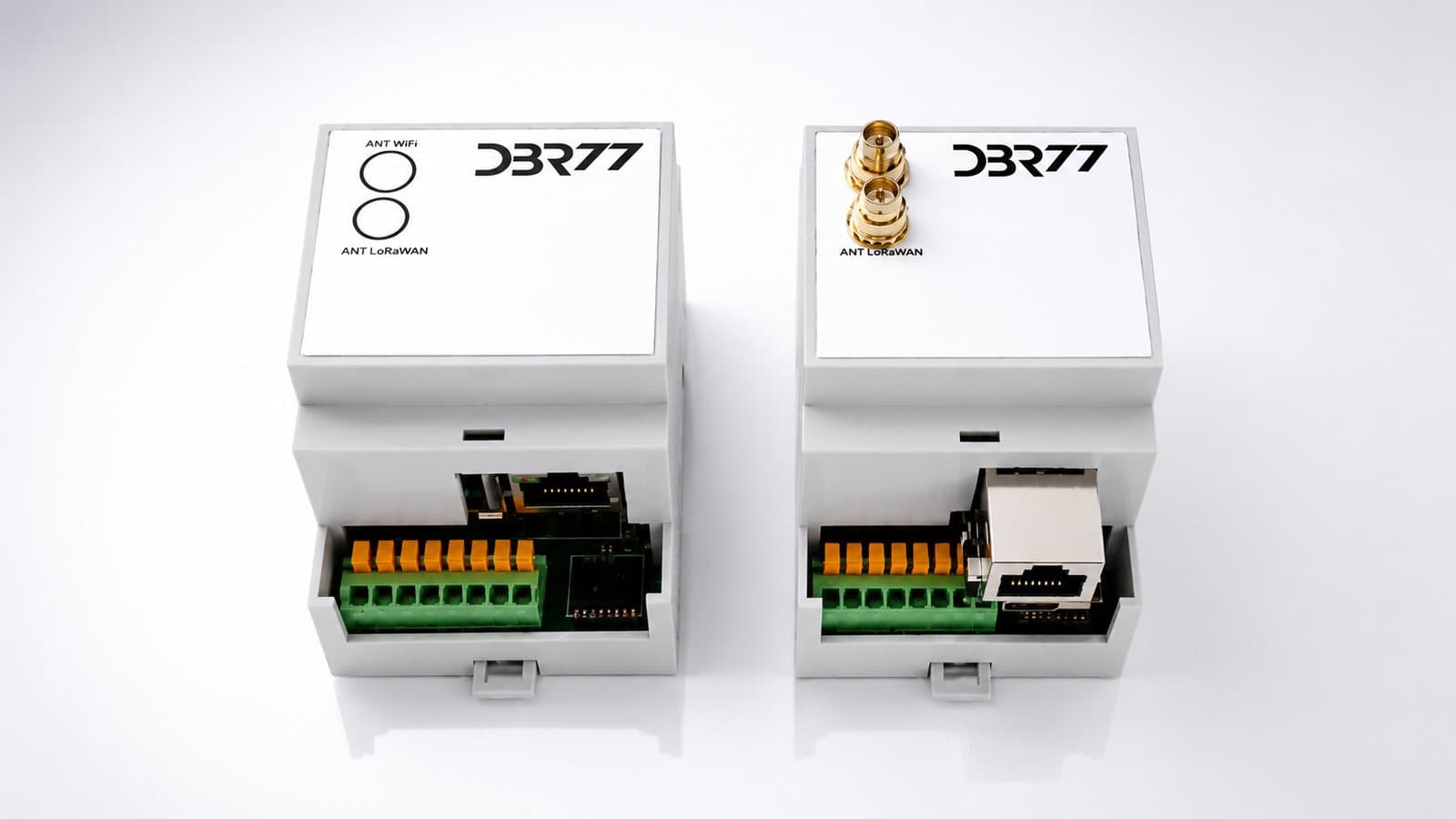
A brownfield floor does not need to be modernized first. Machines with a PLC are read directly; older machines get a small edge device. Our article on the first 30 days in a brownfield factory models a typical site where about three weeks were enough to connect 11 of its 13 machines. The remaining machines can be covered later, or with a camera where there is no signal at all.
Write down before the start what "success" means: for example, response time below 10 minutes and "unknown" below 10% of downtime by week eight.
Step 4: List costs and benefits that finance will recognise
Finance teams trust numbers they can trace. Separate what you can measure from what you can only expect.
| Benefit | How to measure it | When it shows |
|---|---|---|
| Shorter response to stops | Minutes from stop to first action | First weeks |
| Higher availability | Downtime minutes per shift | 4 to 8 weeks |
| Less manual reporting | Hours per week spent on Excel reports | First month |
| Higher OEE | OEE on the pilot line vs baseline | 2 to 3 months |
| Fewer quality escapes | Scrap and rework rate | Longer term, if in scope |
On the cost side, include more than licenses and hardware:
- edge devices, sensors and network work on the line;
- software subscription for the pilot period;
- hours of your own people: a line owner, maintenance, IT/OT;
- the cost of scaling to the next lines, so the board sees the full path.
Step 5: Present the case as a decision, not a vision
The board needs three answers: what we spend, what we expect, and how we will know after eight weeks. Add a scaling plan as well, so the board can see how the result would carry over to the next lines.
If your organization uses a maturity framework, connect the case to it. The Smart Industry Readiness Index helps rank where digital investment pays first. CMMI and data maturity explain why clean, owned data has to come before AI. Deloitte's smart factory research found that the most advanced adopters reported roughly twice the productivity gains of other groups, which is a useful argument for doing the basics well.
IT will ask about security. Processing on site, inside your IT/OT boundary, and alignment with ISA/IEC 62443 make that conversation shorter.
FAQ
What payback period is realistic for an IoT pilot?
It depends on the value of one OEE point on your line and on how much time you lose today between stops and responses. Calculate both before you commit to a payback target. The ROI calculator gives a first estimate in minutes.
What if we cannot sell more output?
Then value the time differently: overtime you can cut, shifts you can cancel, or an investment in a new line you can postpone. These benefits are often easier for finance to accept than extra volume.
Which line should the pilot run on?
The bottleneck line, or the line with the highest share of unexplained downtime. Choose a line with a supervisor who wants the project to succeed.
Do we need to replace old machines first?
No. Older machines without a PLC get a small edge device that reads the available signals. Production keeps running during installation.
How do we keep the pilot from becoming a never-ending pilot?
Agree on the success criteria and the scaling decision date before you start. If the numbers are met, the next lines are already planned and budgeted.
Conclusion
Most of the work on a business case happens before the pilot starts. Collect two weeks of baseline data on your bottleneck line and price one OEE point there with your own shifts and margins. If the result does not support a payback your finance team would accept, run the same check on the line with the highest share of unexplained downtime before you ask for budget.
Plan a pilot on one line
We agree the baseline, the success criteria and the scaling decision with you before the first device is installed.
Sources
- McKinsey & Company, IoT value set to accelerate through 2030
- Vorne, World-Class OEE
- Siemens, The True Cost of Downtime 2024
- Deloitte Insights, Driving value from smart factory technologies
- ISA, ISA/IEC 62443 series of standards
- DBR77, Smart Industry Readiness Index (SIRI)
- DBR77, CMMI and data maturity
- DBR77 IIoT pilot data and modelled base cases, 2026