How to Create a Site-Ready IoT Rollout Playbook for New Lines
A playbook is what the next line borrows when the people who built the pilot are unavailable. Without it, every rollout rediscovers network pain, argues about definitions, and improvises training und…

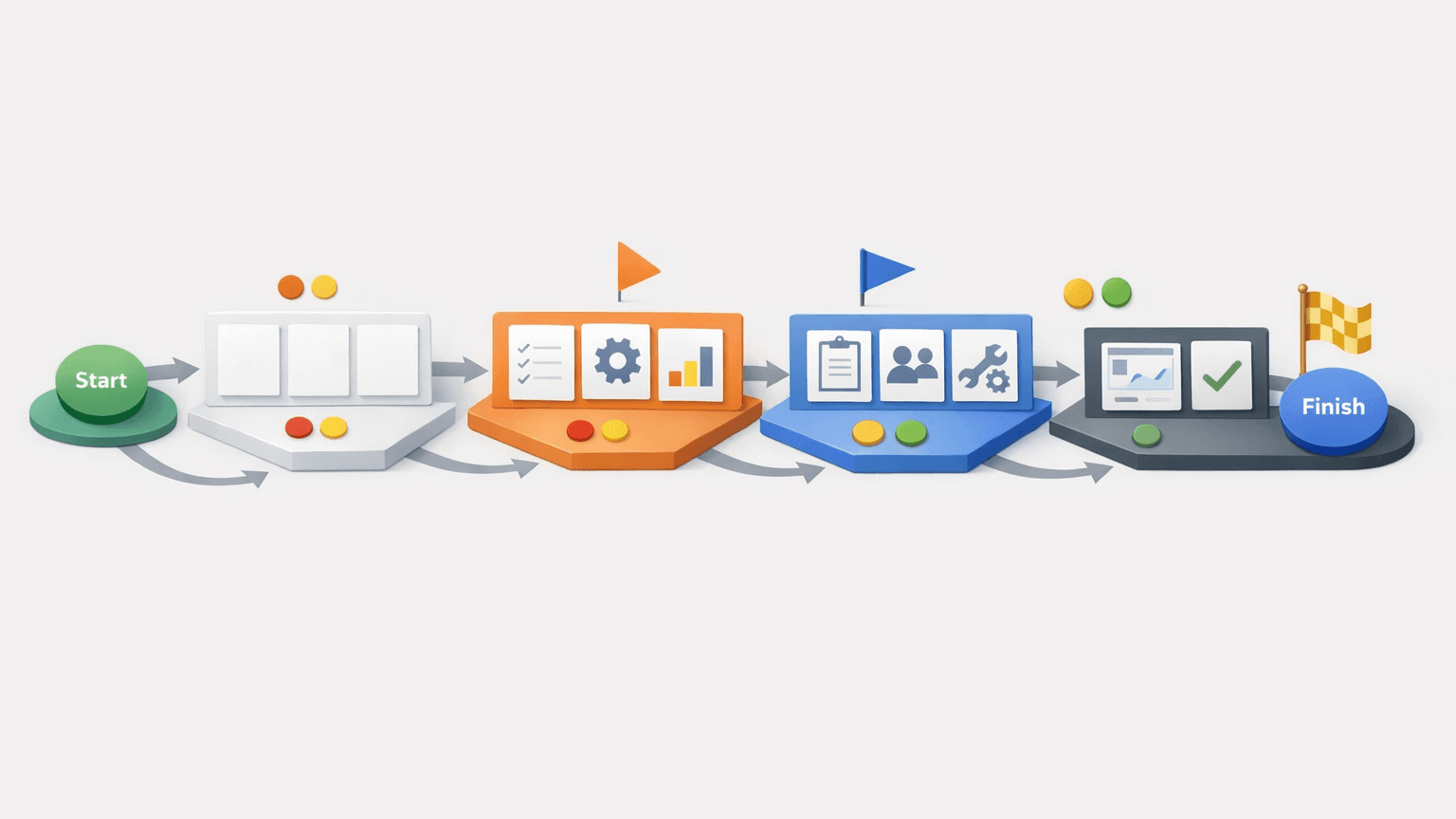
Package ten repeatable blocks
Scope and constraint-asset naming. Network and security minimums IT and OT already signed. Retrofit hardware kit assumptions and placement diagrams. Signal dictionary template aligned to plant standards. State model alignment with operator vocabulary. Operator training and override rules that survived the pilot. Escalation and work-order routing map. Integration now-next-never for MES or CMMS with honest dates. Evidence and retention class expectations. Go-live review with a fixed agenda and named owners.
If a new line cannot execute the checklist, you have a success story—not a factory standard.
Minimum pages the playbook must include
A one-page scope and constraints summary. Network and security prerequisites with test scripts. Hardware BOM and placement drawing. Dictionary and state appendix. Training script plus competency check. Cutover and rollback steps. Thirty- and ninety-day review calendars.
Link the playbook to how to go from one successful IoT pilot to a plant standard and how to roll out IoT across multiple lines without losing control.
Blind-test replication
Have a second team install from the package without the original hero present. Fix everything that breaks in documentation and training. Version the standard and keep a changelog like any other plant system.
Playbook readiness: blind replication passed; owners named per block; changelog process live; finance recognizes a replication SKU or equivalent predictable cost.
Start the playbook before the hero is busy
If you wait until replication pressure peaks, the playbook will be rushed and shallow. Begin packaging during pilot week three while memory is fresh and exceptions are still visible. The best playbooks are written by people who still remember what hurt.
DBR77 IoT as repeatable entry
DBR77 IoT supports site-ready playbooks when deployment artifacts—hardware pattern, definitions, training, reviews—ship as a versioned package, not tribal knowledge.
Build a site-ready IoT playbook so new lines inherit constraints, scope, cutover, handover, and governance in one executable motion. Scale should feel operational, not improvised.
Keep the article’s promise practical
Translate the ideas above into one habit your plant can sustain next month: a review that happens, a dictionary people open, a routing rule people trust, or a drill people run. Big programs stall when everything moves at once. Small loops compound when they repeat.
A leadership checkpoint for the next ops review
Ask one plain question: what changed on the floor this month because IoT made reality clearer—not louder? If the answer is vague, tighten scope, definitions, or review cadence before expanding footprint. Useful IoT shows up as calmer handovers, faster confirmation, and fewer circular arguments about what happened. Connection counts are inputs; behavior change is the receipt.
Bringing it home on the floor
None of this advice matters if it stays in a steering deck. The useful test is whether the next shift can act with less debate: clearer states, fewer mystery stops, faster confirmation, and escalation that respects attention. When IoT is working, the line feels less like a courtroom and more like a coordinated team—still loud, still busy, but oriented around the same facts.
If you walk the floor and people still describe the system as “the computer” instead of “our picture of the line,” keep tightening context, ownership, and review until the language changes. Language lag is a symptom that the loop is still too thin.
DBR77 IoT helps sites package IoT rollout into repeatable playbooks: retrofit patterns, definitions, training, and go-live reviews new lines can execute. Plan a pilot or See online demo.