How to Keep IoT Signal Definitions Consistent Across Shifts
IoT does not create a common language by default. It amplifies whatever vocabulary the plant already has.
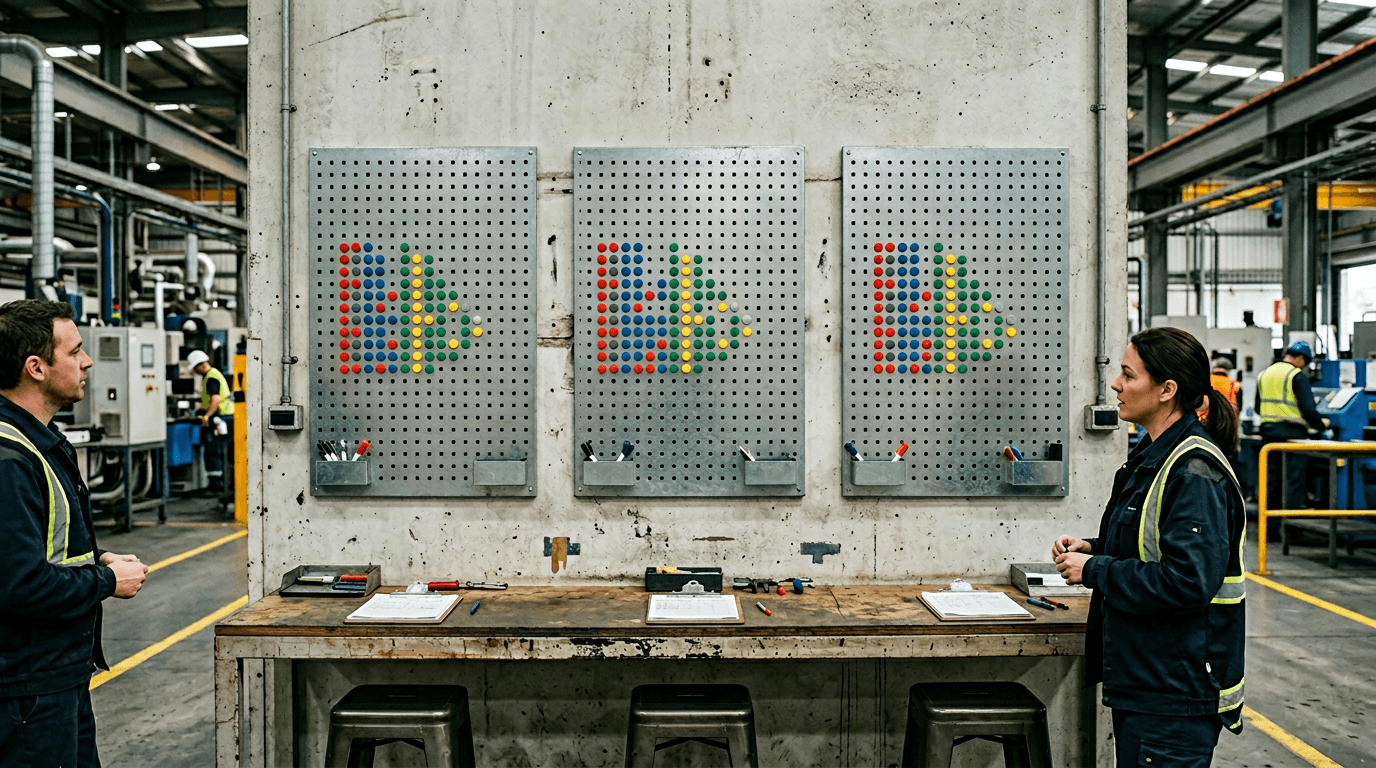
Publish one plant dictionary
Authoritative meanings for states, reasons, and critical thresholds should live where operators actually look—in briefings, line boards, and training—not buried in engineering folders. If people cannot find the dictionary, they will invent one.
Freeze handover field names
The labels used at shift change should change rarely and only through change control. Casual renames break history and confuse crews. Treat renames like any other MOC: announce, train, date-stamp.
Train every shift on the same words
Run practical drills with realistic scenarios. Ask each shift to name the state and reason using dictionary language. When words diverge, fix training or simplify definitions before you blame people.
Sample audit monthly
Pull operators aside on different days and shifts. Ask them to explain the same tag in their own words. If explanations diverge, update training, tighten definitions, or fix UI labels that mislead.
Co-sign threshold changes
When limits move, maintenance and operations should share accountability for why. Silent engineering tweaks teach the floor that the system is arbitrary.
Definition stability check: dictionary owner named; handover fields frozen; renames via change control; monthly sample audits scheduled; threshold updates co-signed and communicated in shift language.
Translate engineering names into floor names
If the dictionary uses jargon operators never say aloud, they will not use it. Co-create labels with crews and keep engineering synonyms in a back field if analytics need them.
DBR77 IoT and shared language
DBR77 IoT supports consistency when configuration treats definitions as governed objects—reason lists, state models, threshold ownership—not as developer afterthoughts bolted on after go-live.
Shared language is shared truth. Keep signal definitions consistent with one dictionary, frozen handover fields, and monthly reality checks that respect every shift’s voice.
Keep the article’s promise practical
Translate the ideas above into one habit your plant can sustain next month: a review that happens, a dictionary people open, a routing rule people trust, or a drill people run. Big programs stall when everything moves at once. Small loops compound when they repeat.
A leadership checkpoint for the next ops review
Ask one plain question: what changed on the floor this month because IoT made reality clearer—not louder? If the answer is vague, tighten scope, definitions, or review cadence before expanding footprint. Useful IoT shows up as calmer handovers, faster confirmation, and fewer circular arguments about what happened. Connection counts are inputs; behavior change is the receipt.
Bringing it home on the floor
None of this advice matters if it stays in a steering deck. The useful test is whether the next shift can act with less debate: clearer states, fewer mystery stops, faster confirmation, and escalation that respects attention. When IoT is working, the line feels less like a courtroom and more like a coordinated team—still loud, still busy, but oriented around the same facts.
If you walk the floor and people still describe the system as “the computer” instead of “our picture of the line,” keep tightening context, ownership, and review until the language changes. Language lag is a symptom that the loop is still too thin.
DBR77 IoT helps plants keep IoT definitions consistent with governed reason lists, machine states, and operator-facing language across shifts. Plan a pilot or See online demo.