How to Reduce False Alarms in IIoT Systems
A false alarm is not a cosmetic annoyance. It is a reliability defect.

Agree on definitions before you debate thresholds
Write a short plant standard for what counts as a false alarm versus a valid early warning that felt inconvenient, and what counts as a missed detection. Without shared language, tuning becomes politics dressed as engineering.
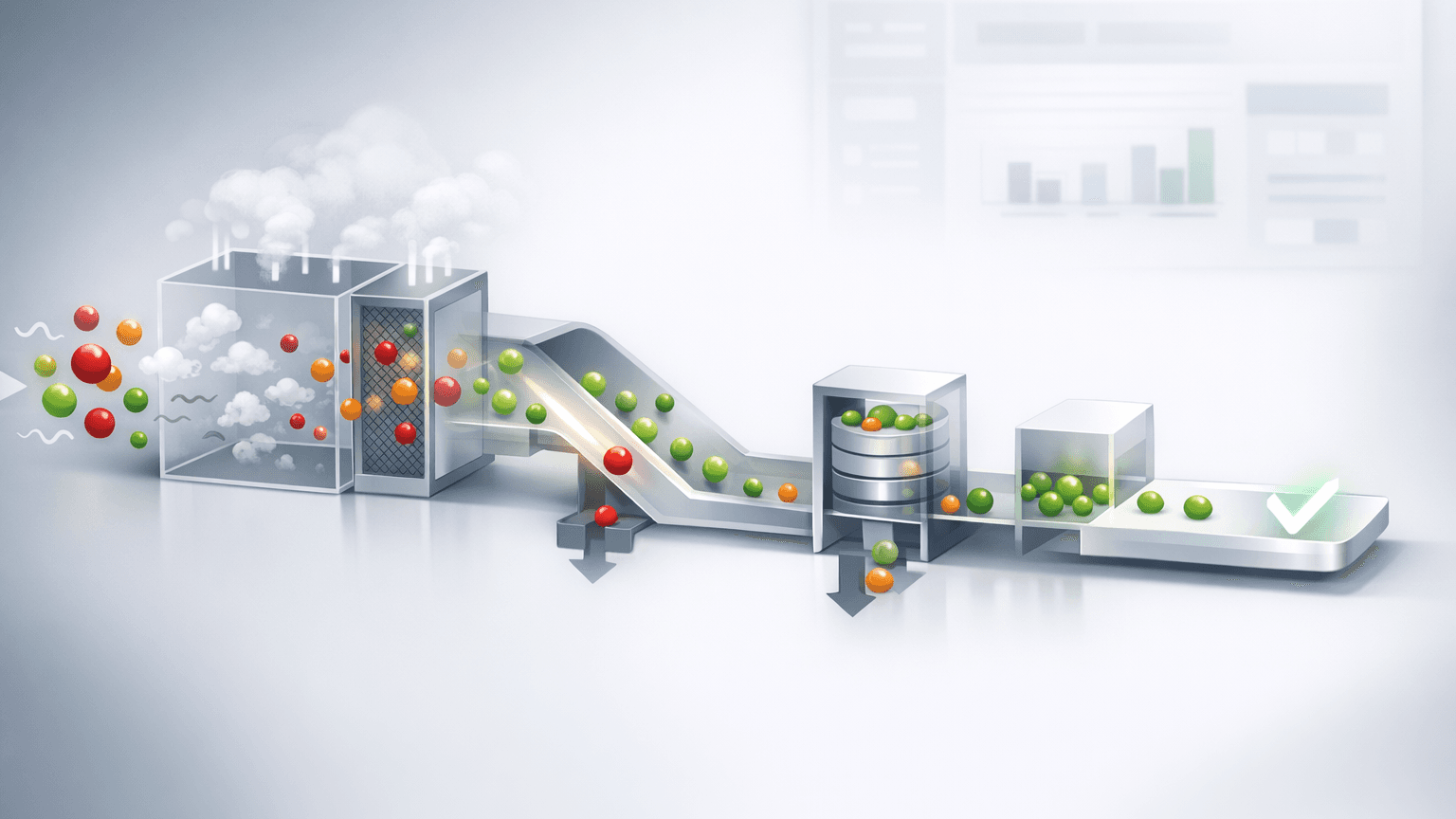
Run a monthly reduction loop until fatigue stabilizes
Inventory the top alarms by count and by operator ignore rate. Classify root causes: threshold issues, sensor noise, missing context, human habit, communications glitches. Add corroboration where feasible before promoting high urgency. Use dwell and hysteresis so brief spikes do not become incidents. Attach context—product, shift, recent change, last maintenance window—so events arrive as stories, not pings. Co-sign threshold changes with maintenance and operations. Track false alarm rate, acknowledgement time on true events, and repeat incidents so improvement is measurable, not felt.
Edge filtering and buffering can remove chatter if rules stay transparent and logged. Edge should clarify why something fired, not obscure it.
What earns interruption belongs upstream in what machine data should trigger action and what should not. Moving past visibility belongs in when to expand from visibility to closed-loop response.
Before you change a threshold: physical verification or a second signal supports the change; an owner and review date exist; operators were notified in shift language; work-order linkage still makes sense; rollback is documented.
DBR77 IoT as alarm engineering
DBR77 IoT aligns when alarm programs are treated as engineering: inventory, classification, corroboration, dwell, context, co-signed tuning, and shared metrics. Retrofit connectivity should prioritize the noisiest actors first; local gating earns its place when transparency remains. Volume is the wrong success metric.
False alarms yield to discipline: measure, classify, corroborate, dwell, contextualize, co-sign, and review monthly until attention budgets recover. That is how alarms regain seriousness.
Celebrate closures, not volume
When a monthly loop removes a chronic nuisance alarm, tell the floor what changed and why. People support tuning they can see. Silent changes feel arbitrary.
Keep the article’s promise practical
Translate the ideas above into one habit your plant can sustain next month: a review that happens, a dictionary people open, a routing rule people trust, or a drill people run. Big programs stall when everything moves at once. Small loops compound when they repeat.
A leadership checkpoint for the next ops review
Ask one plain question: what changed on the floor this month because IoT made reality clearer—not louder? If the answer is vague, tighten scope, definitions, or review cadence before expanding footprint. Useful IoT shows up as calmer handovers, faster confirmation, and fewer circular arguments about what happened. Connection counts are inputs; behavior change is the receipt.
Bringing it home on the floor
None of this advice matters if it stays in a steering deck. The useful test is whether the next shift can act with less debate: clearer states, fewer mystery stops, faster confirmation, and escalation that respects attention. When IoT is working, the line feels less like a courtroom and more like a coordinated team—still loud, still busy, but oriented around the same facts.
If you walk the floor and people still describe the system as “the computer” instead of “our picture of the line,” keep tightening context, ownership, and review until the language changes. Language lag is a symptom that the loop is still too thin.
DBR77 IoT supports disciplined alarm design with transparent rules, operator context, and tuning ownership so signals stay credible on the shop floor. Plan a pilot or See online demo.