How to Roll Out IoT Across Multiple Lines Without Losing Control
The first line is a story the plant tells itself. The next lines are a test of whether that story is a system.

Publish a minimum package before each line joins
Write a one-page replication kit: the standard signal set for the use case, naming and ID rules carried forward from the pilot, gateway or edge placement pattern, which alert classes are allowed in phase one (usually mostly monitor-only), and named roles for daily OT care, weekly maintenance review, and operations steering.
If a line cannot accept the package, treat the gap as a documented exception with an owner and a sunset date—not a silent workaround that becomes permanent local law.
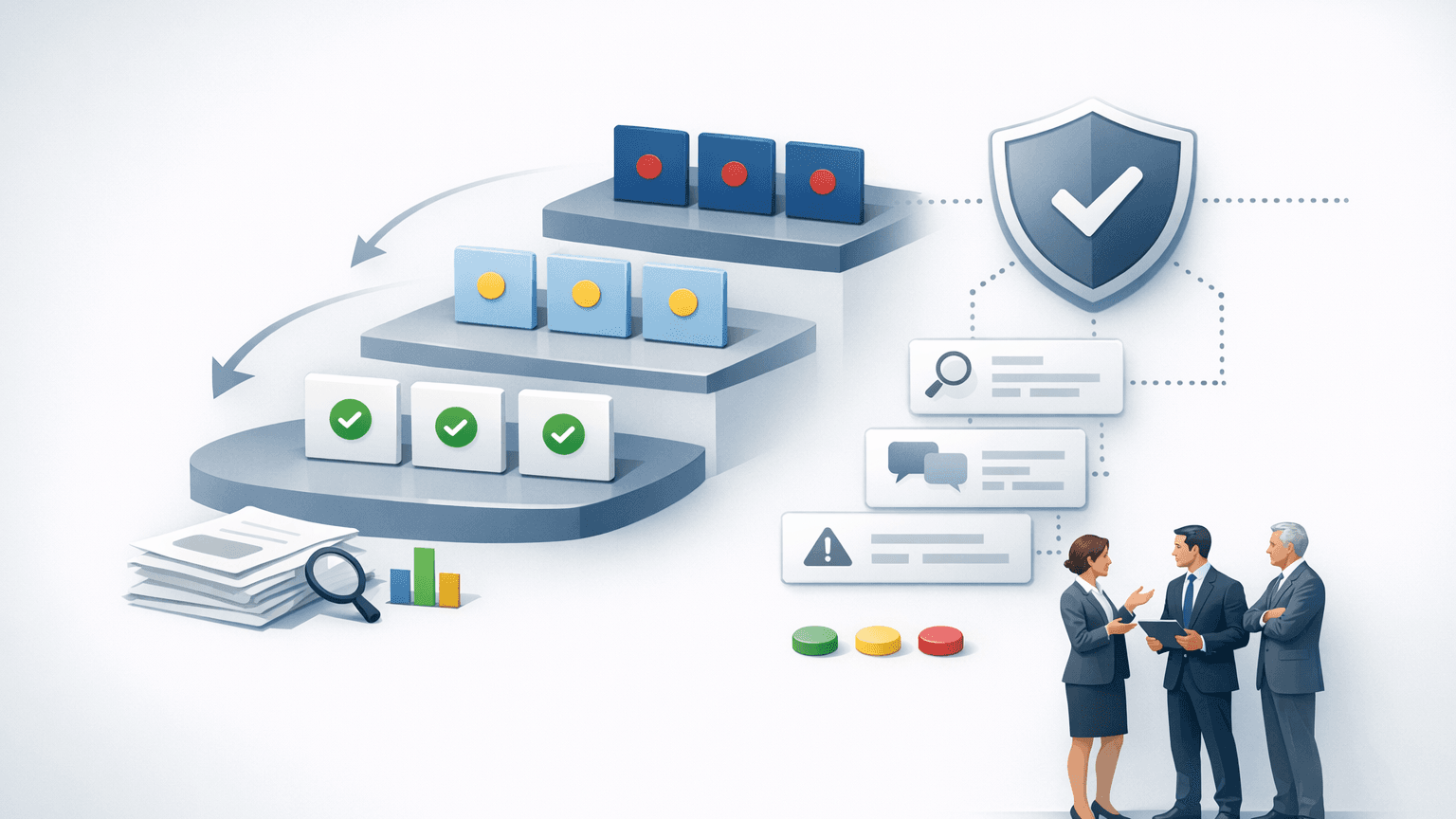
Keep governance light but on a clock
A practical cadence is a twenty-minute weekly touch on incident themes, ignored alerts, and data gaps; a forty-five-minute monthly session on threshold changes, newly promoted signals, and the exception log; and a quarterly hour for standard updates, vendor change review, and security patch windows. The goal is predictable steering, not another standing committee that substitutes talk for control.
Central standard, logged exceptions
Naming, alert classes, review cadence, and KPI definitions should travel as defaults. Local variation belongs in an exception register with approvers and expiry. Empathy for line differences is necessary; uncontrolled divergence is how IoT becomes fifty private languages.
When lines push for unique rules, answer with what is physically different, what proof shows the pilot standard fails, and when the line will rejoin the standard or retire the exception. Without a paper trail, empathy becomes fragmentation.
The governing frame for expansion is from pilot to scale: how to roll out IIoT without losing control. Month-one credibility sits in what the first 30 days of IIoT should look like in a brownfield factory. Packaging the pilot into something copyable is how to go from one successful IoT pilot to a plant standard.
Replication go-live check: time and identity checks passed with pilot scripts; operator training explains what changed versus old habits; escalation paths match the pilot, including backups; CMMS or work-order hooks are integrated or explicitly deferred with a date; success metrics for the line were chosen before arguments start.
DBR77 IoT as replication OS
DBR77 IoT supports multi-line rollout when the story is a replication operating system: minimum package, written exceptions, weekly-to-quarterly cadence, and hardware patterns that copy a standard instead of rediscovering it.
Roll out across lines with a package, a checklist, and a clock. Centralize the standard, log the exceptions, review them on purpose. Speed without control is just expensive noise.
A leadership checkpoint for the next ops review
Ask one plain question: what changed on the floor this month because IoT made reality clearer—not louder? If the answer is vague, tighten scope, definitions, or review cadence before expanding footprint. Useful IoT shows up as calmer handovers, faster confirmation, and fewer circular arguments about what happened. Connection counts are inputs; behavior change is the receipt.
Bringing it home on the floor
None of this advice matters if it stays in a steering deck. The useful test is whether the next shift can act with less debate: clearer states, fewer mystery stops, faster confirmation, and escalation that respects attention. When IoT is working, the line feels less like a courtroom and more like a coordinated team—still loud, still busy, but oriented around the same facts.
If you walk the floor and people still describe the system as “the computer” instead of “our picture of the line,” keep tightening context, ownership, and review until the language changes. Language lag is a symptom that the loop is still too thin.
DBR77 IoT helps plants replicate IoT across lines with consistent signals, ownership, and review rhythms—without losing control at scale. Plan a pilot or See online demo.