How to Start IIoT Without Breaking Production
The most common reason IIoT stalls is not skepticism about technology. It is a reasonable fear that the cure will interrupt the patient. Plants have watched big-bang programs eat calendar time, pull …

Why “transformation” is the wrong opening frame
When the first conversation centers on platforms, enterprise standards, and multi-year roadmaps, operations hears risk. Maintenance hears another ticket stream. Operators hear more screens. Resistance is not irrational—it is self-protection.
Reframe the entry as a diagnostic: one place where loss repeats, one response path that is clearly too slow, one pocket of the plant where better truth would change today’s decisions. That turns IIoT from an abstract initiative into an experiment with guardrails.
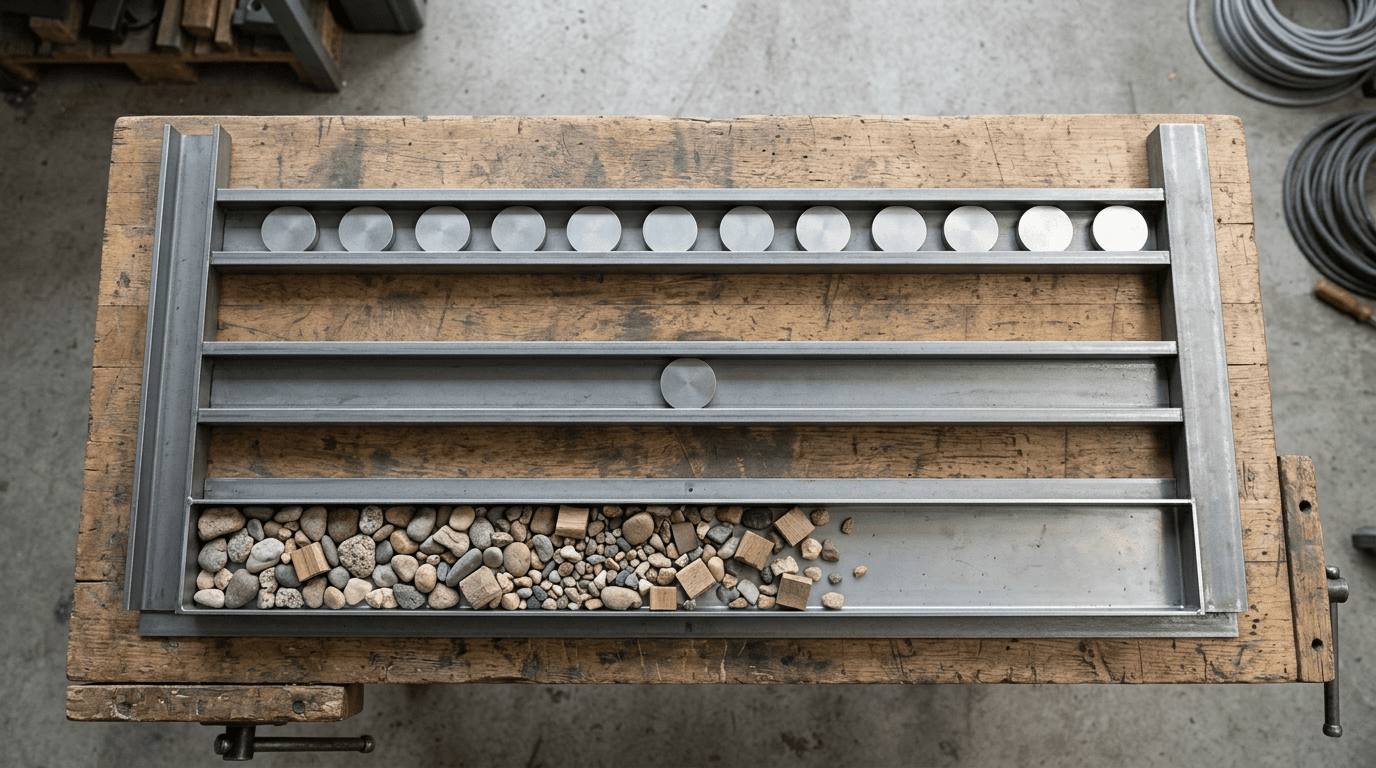
The failure mode of starting too wide
Connecting “everything,” perfecting architecture before the first trustworthy signal, or chaining the pilot to heavy ERP, MES, or CMMS work multiplies dependencies. The project becomes hard to approve, hard to schedule, and hard to learn from because too many variables move at once.
If the first phase cannot show a believable improvement loop in weeks, the organization will quietly return to spreadsheets and heroic supervision.
The safer pattern: one line, one question
Pick a line, cell, or handful of stations where pain is real and politically survivable. Anchor the pilot on an operational question you can observe without philosophy: Where does unknown downtime concentrate? How long does it take from stop to meaningful response? Which losses recur inside the same shift?
You are not trying to prove digital maturity. You are trying to prove that better visibility changes behavior without breaking rhythm.
What a pilot should contain
Enough connectivity to see machine state and key events. Enough operator workflow to capture reasons and context without turning the shift into data entry. Enough alerting discipline to test escalation—not a firehose, but a narrow set of events that deserve interruption. A short review cadence so leadership judges loop quality, not slide polish.
The goal is learning velocity with production safety, not a miniature copy of a future enterprise stack.
What a pilot should refuse
Plant-wide rollout pressure, deep customization before basics work, and integration depth that delays the first honest signal. If approvals and dependencies resemble a corporate transformation program, you have already lost the pilot shape that protects production.
Brownfield is why small starts win
Mixed vintages, uneven connectivity, and tight install windows reward approaches that respect OT constraints. A retrofit-friendly footprint that lands in a controlled window signals respect for the people who own uptime.
What operators and managers both need to see
Operators need simplicity: clear screens, fast reason capture, alerts that mean something, and no parallel reporting homework. Managers need evidence: trustworthy baselines, visible patterns, credible adoption, and a path to repeat what worked.
Miss either side and the pilot becomes a technical success with a human failure mode.
Thirty days and ninety days: different jobs
The first month should establish signal credibility and a sane context habit without destabilizing the line. By ninety days, the conversation should be about whether the loop is faster, whether recurrence is easier to discuss honestly, and whether expansion is justified—or whether the model still needs tightening.
Demo versus pilot
A demo aligns stakeholders on concepts. A pilot tests reality: your machines, your people, your political landscape. Sequence them deliberately: demo for shared language, pilot for proof, rollout for scale.
DBR77 IoT as an entry posture
DBR77 IoT’s public positioning—fast pilot deployment, a narrow workstation or line scope, retrofit-friendly connection, real-time visibility and alerts—maps cleanly to low-risk starts. It is an answer to the plant that needs proof before it can stomach a platform debate.
The safest IIoT start is narrow, real, and reversible in spirit even if the technology stays. One contained scope, one honest problem, one response loop you can review without mythology. That is how factories move forward without betting the shift.
DBR77 IoT is built for low-risk pilot deployment on one line or a few stations, so manufacturers can prove value before committing to broader rollout. Plan a pilot or Compare demo vs trial.