What Data Retention and Traceability Should Look Like in IIoT
Retention is where optimism meets liability.

Classify before you store
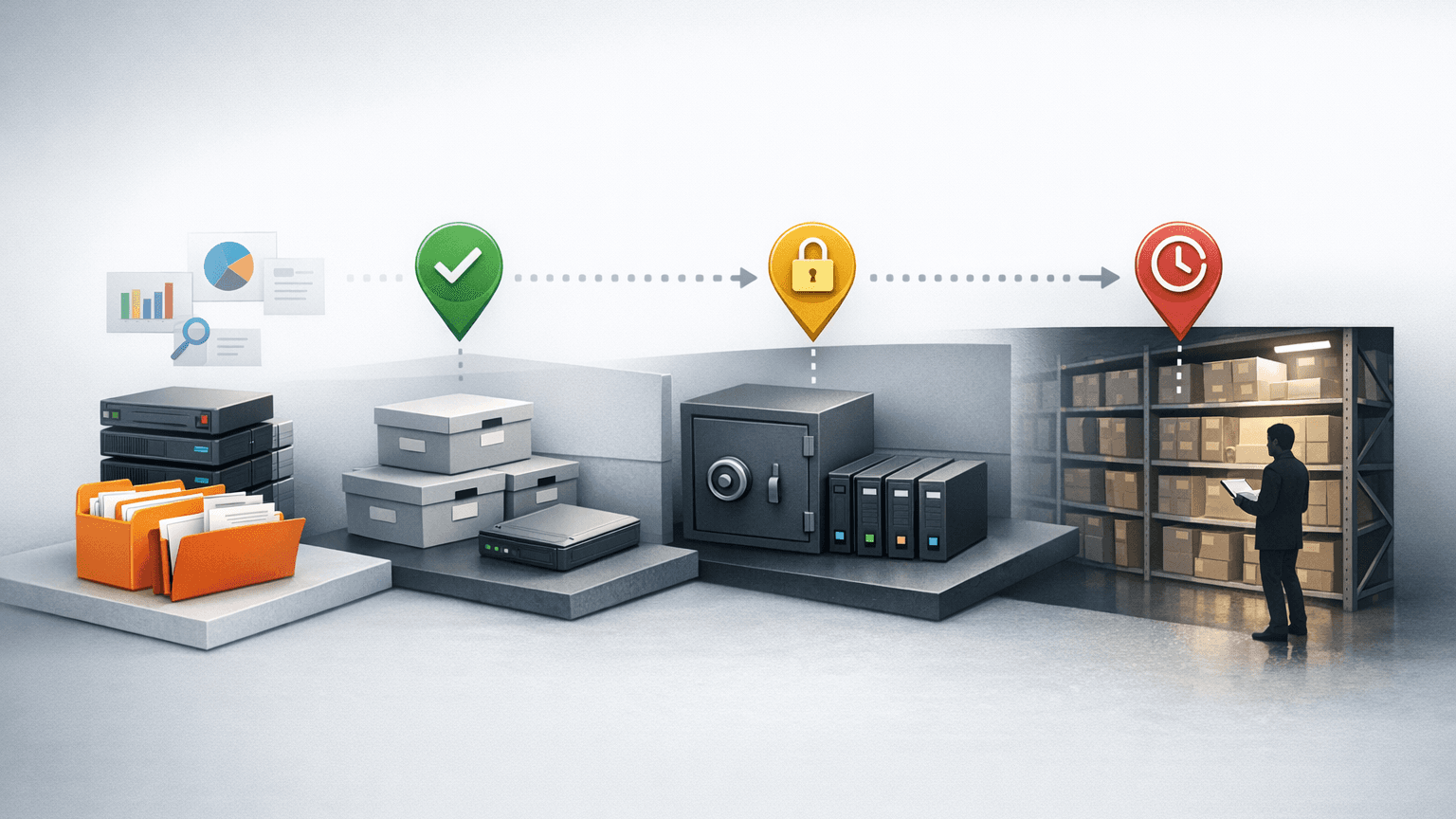
Define retention tiers by signal class and product context: what must be immutable or controlled-rewrite for safety and quality critical paths; what supports operational improvement on shorter horizons; what can aggregate after a period; what should never have been ingested. If you cannot explain why a class is retained, you are not ready to widen the funnel.
Build traceability chains, not islands
Link machine events to operator confirmations, maintenance actions, and overrides where systems allow. The goal is a story a stranger can follow next month: what happened, who saw it, what was done, what changed afterward.
Honest storage and change boundaries
Decide who can alter or delete, under what approvals, and how backups behave. Panic exports the night before an audit signal missing routine discipline, not a storage problem alone.
Practice exports before you need them
Run drills that simulate complaint reconstruction. If the drill requires one engineer’s laptop or undocumented queries, fix the procedure before the real event.
Retention readiness: tiers published with owners; traceability path documented; export drills practiced; deletion rules explicit; critical logs treated with change control.
Run a one-hour reconstruction drill
Pick a recent difficult week—not the easy one—and ask the team to reconstruct it using only retained records and defined export paths. Time how long it takes and note every workaround (USB sticks, ad hoc queries, screenshots). Those workarounds are your real policy until you replace them with procedures.
DBR77 IoT in regulated reality
DBR77 IoT supports grown-up programs when retention and traceability are design requirements—evidence categories leadership can review—rather than surprises discovered in infrastructure.
Retention and traceability should be classified, owned, and bounded, with chains from machine events to human actions and routines that survive both calm weeks and difficult ones.
Keep the article’s promise practical
Translate the ideas above into one habit your plant can sustain next month: a review that happens, a dictionary people open, a routing rule people trust, or a drill people run. Big programs stall when everything moves at once. Small loops compound when they repeat.
A leadership checkpoint for the next ops review
Ask one plain question: what changed on the floor this month because IoT made reality clearer—not louder? If the answer is vague, tighten scope, definitions, or review cadence before expanding footprint. Useful IoT shows up as calmer handovers, faster confirmation, and fewer circular arguments about what happened. Connection counts are inputs; behavior change is the receipt.
Bringing it home on the floor
None of this advice matters if it stays in a steering deck. The useful test is whether the next shift can act with less debate: clearer states, fewer mystery stops, faster confirmation, and escalation that respects attention. When IoT is working, the line feels less like a courtroom and more like a coordinated team—still loud, still busy, but oriented around the same facts.
If you walk the floor and people still describe the system as “the computer” instead of “our picture of the line,” keep tightening context, ownership, and review until the language changes. Language lag is a symptom that the loop is still too thin.
DBR77 IoT supports IIoT retention and traceability with structured event history, operator context, and governance-friendly evidence categories. Plan a pilot or See online demo.