What Machine Data Should Trigger Action and What Should Not
Most shop-floor IoT failures are priority failures, not sensor failures.
Visibility is not urgency
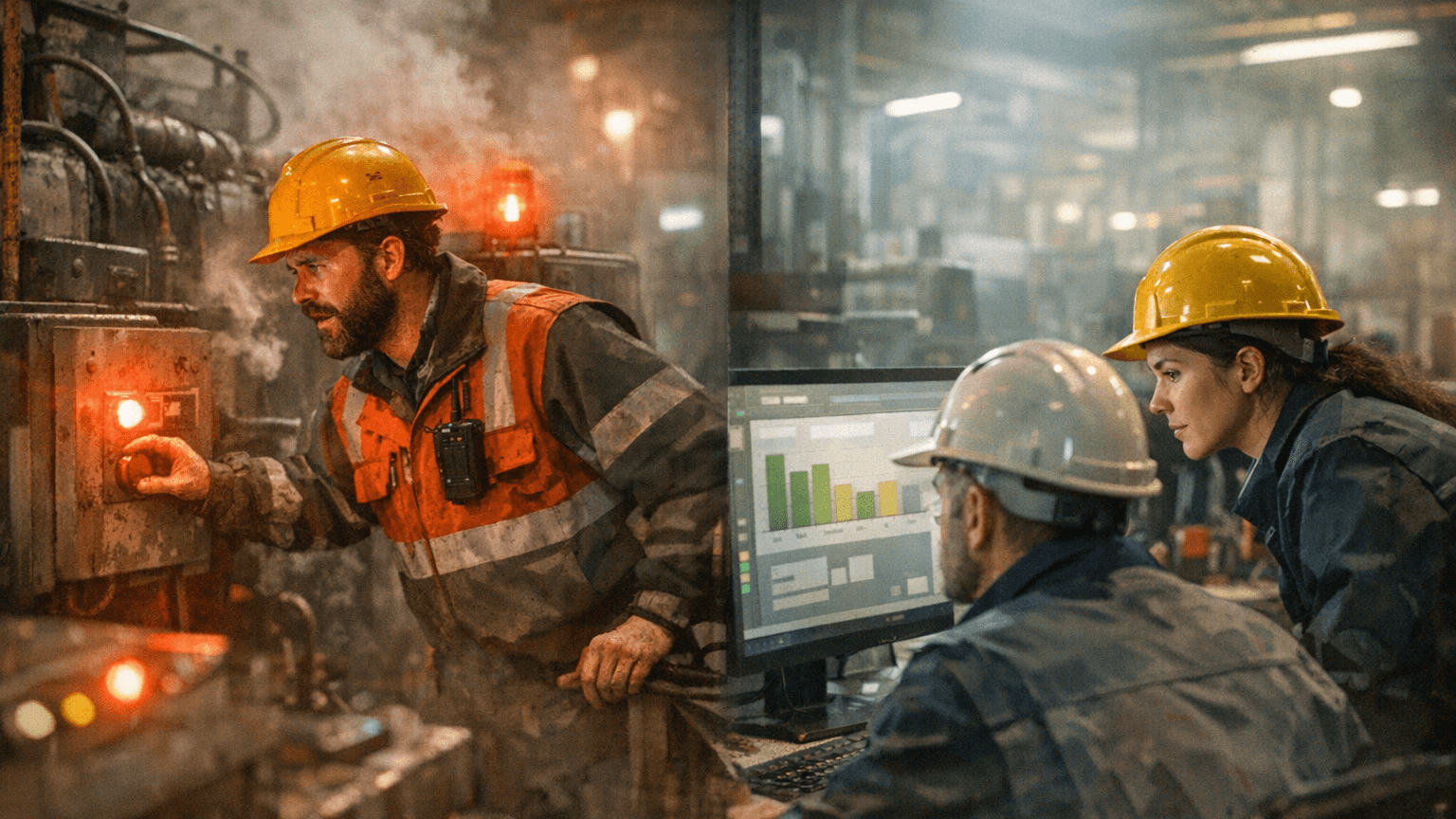
Real-time monitoring shortens reaction time only when the right events interrupt the right people. If temperature, vibration, cycle counters, and quality proxies all arrive as red banners, the organization trains itself to treat alerts as weather.
Three signal classes most plants can live with
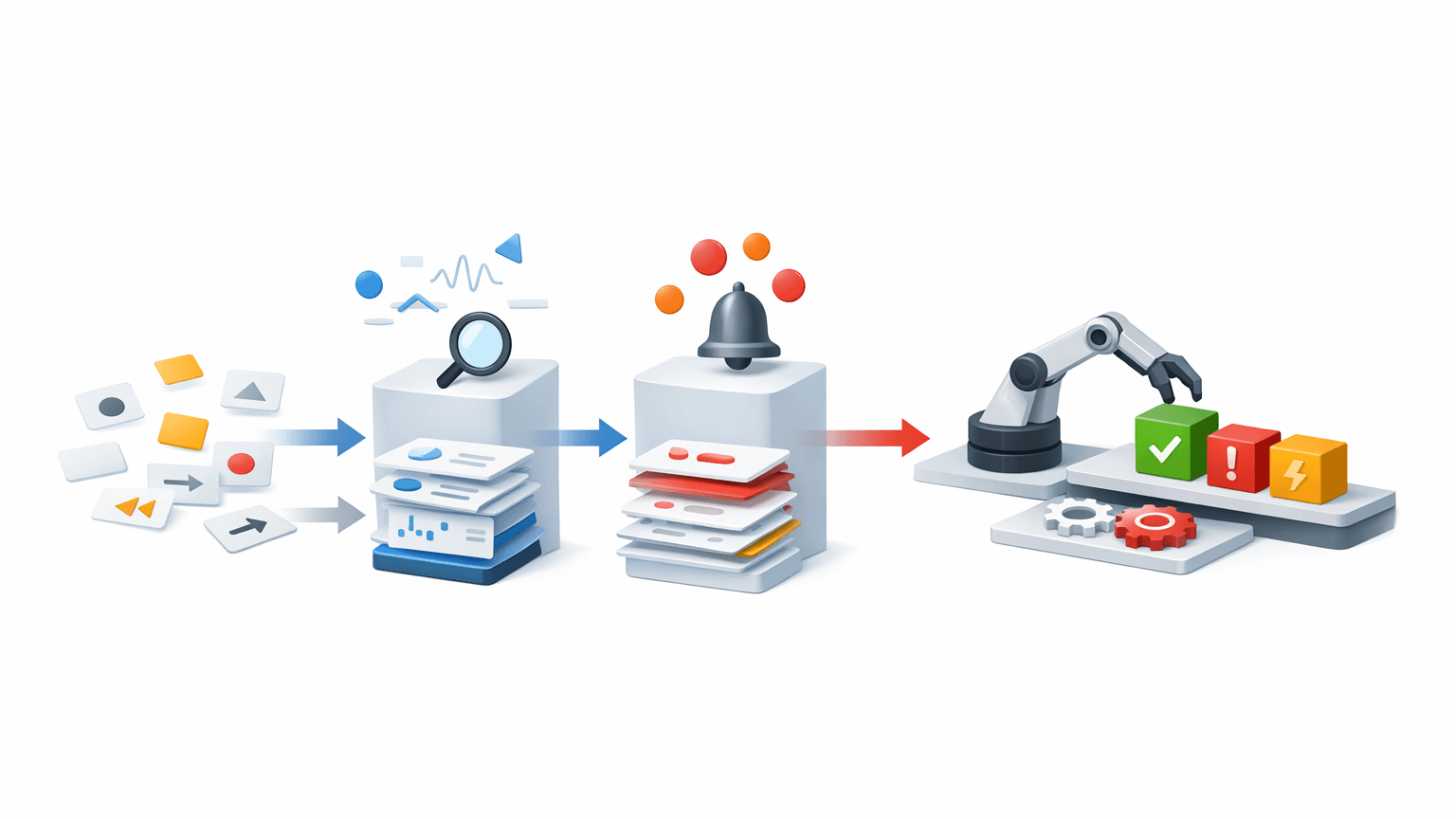
Monitor-only signals support baselining and later tuning; they should not break concentration. Notify-with-context signals deserve a nudge when the condition is rare, explainable, and tied to a known playbook. Act-or-stop signals belong to conditions where delay clearly increases risk the plant already names—scrap, safety boundaries, or unplanned downtime patterns everyone agrees are unacceptable.
Early months should bias toward monitor-only more than teams expect. Patience in promotion is what makes later alerts believable.
Promote to action only with an operational contract
Before a signal earns escalation, the plant should agree there is an owner and a next step, a human can verify quickly on the floor, ignoring it for a shift would violate your own risk standard, thresholds tie to observed failure modes rather than generic defaults, and the response reduces variance instead of adding meetings.
If the first three answers are shaky, keep the signal in learning mode until the story is clear.
What usually should wait
Raw variance without baselines per line and shift, one-off anomalies without corroboration, interesting correlations without a maintenance or quality narrative, and vendor-default thresholds copied from unlike machines often belong in visibility-first mode. None of that wastes data; it protects attention.
What often earns earlier escalation
Sustained breaches aligned with internal or OEM guidance, repeated stall patterns tied to known bottlenecks, precursors your plant has already lived through, and limits you already treat as non-negotiable tend to justify earlier action—because credibility comes from your history, not from novelty.
Classified signals versus dashboard culture
Dashboard-first setups invite passive scanning. Alert-everything setups invite muting. Classified signals demand upfront discipline but produce calmer floors and clearer ownership. DBR77 IoT’s positioning aligns with that third path when pilots emphasize signal classes and deliberate promotion rather than raw feed volume.
Tighten rules through review, not hope: ingest broadly where learning requires it, baseline honestly, promote a small action set per line, review what was ignored and why, expand only after trust holds across two review cycles.
For the human side of overload, read why IIoT alerts fail on the shop floor and what works instead. For tuning discipline, continue with how to reduce false alarms in IIoT systems and when to expand from visibility to closed-loop response.
Trigger action when data changes the next safe decision, has an owner, and passes a short reality test. Everything else can remain visible until the plant is ready to trust it.
Bringing it home on the floor
None of this advice matters if it stays in a steering deck. The useful test is whether the next shift can act with less debate: clearer states, fewer mystery stops, faster confirmation, and escalation that respects attention. When IoT is working, the line feels less like a courtroom and more like a coordinated team—still loud, still busy, but oriented around the same facts.
If you walk the floor and people still describe the system as “the computer” instead of “our picture of the line,” keep tightening context, ownership, and review until the language changes. Language lag is a symptom that the loop is still too thin.
DBR77 IoT helps plants classify machine signals and move deliberately from visibility to action with ownership, context, and shop-floor discipline. Plan a pilot or See online demo.