From Visibility to Closed-Loop Response: Maintenance Priorities and Plan Changes
DBR77 Team · Published
Expand from visibility to closed-loop response once machine data is trusted and every alert already has an owner. The next step is a set of written rules that decide, for each signal pattern, who acts, how fast and at what level: a quick fix, a maintenance priority, a plan change or structured problem solving.
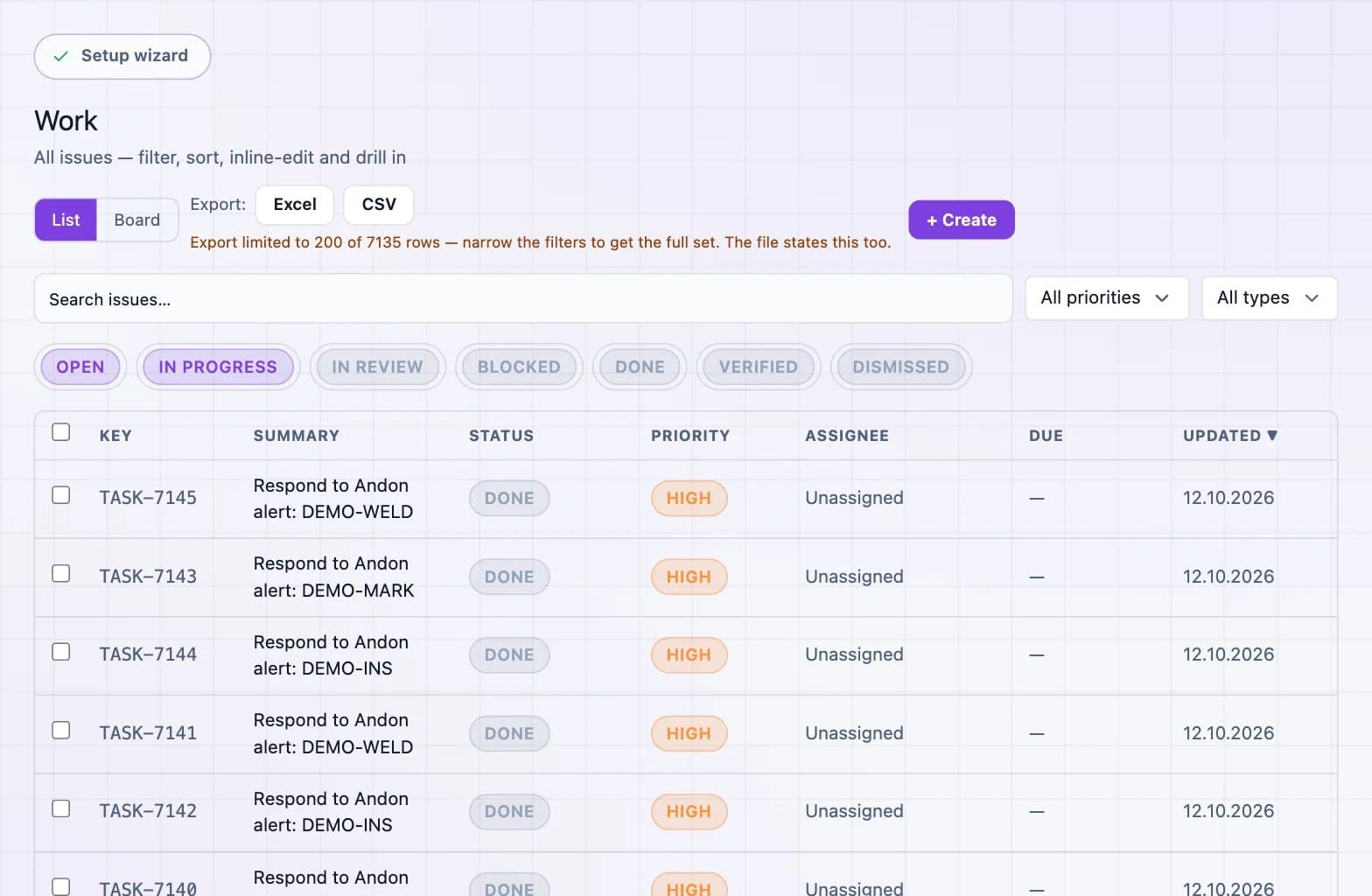
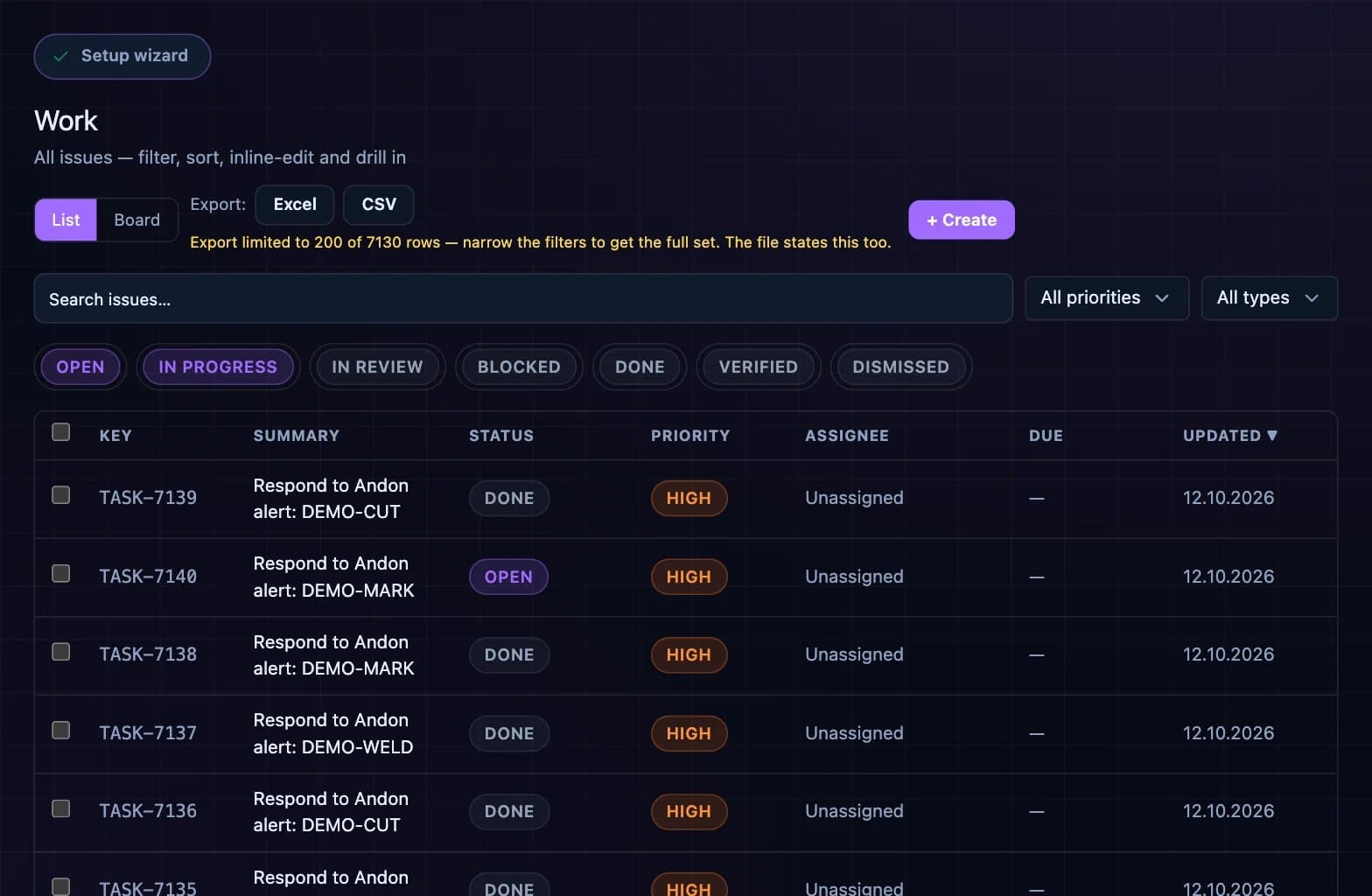
Visibility shows what happened on the line; a closed loop also assigns the next action and lets you check that it was done. On one corrugated-packaging line, turning every event into an alert and every alert into a tracked task with an owner cut response time to a stop from 24 to 9 minutes.
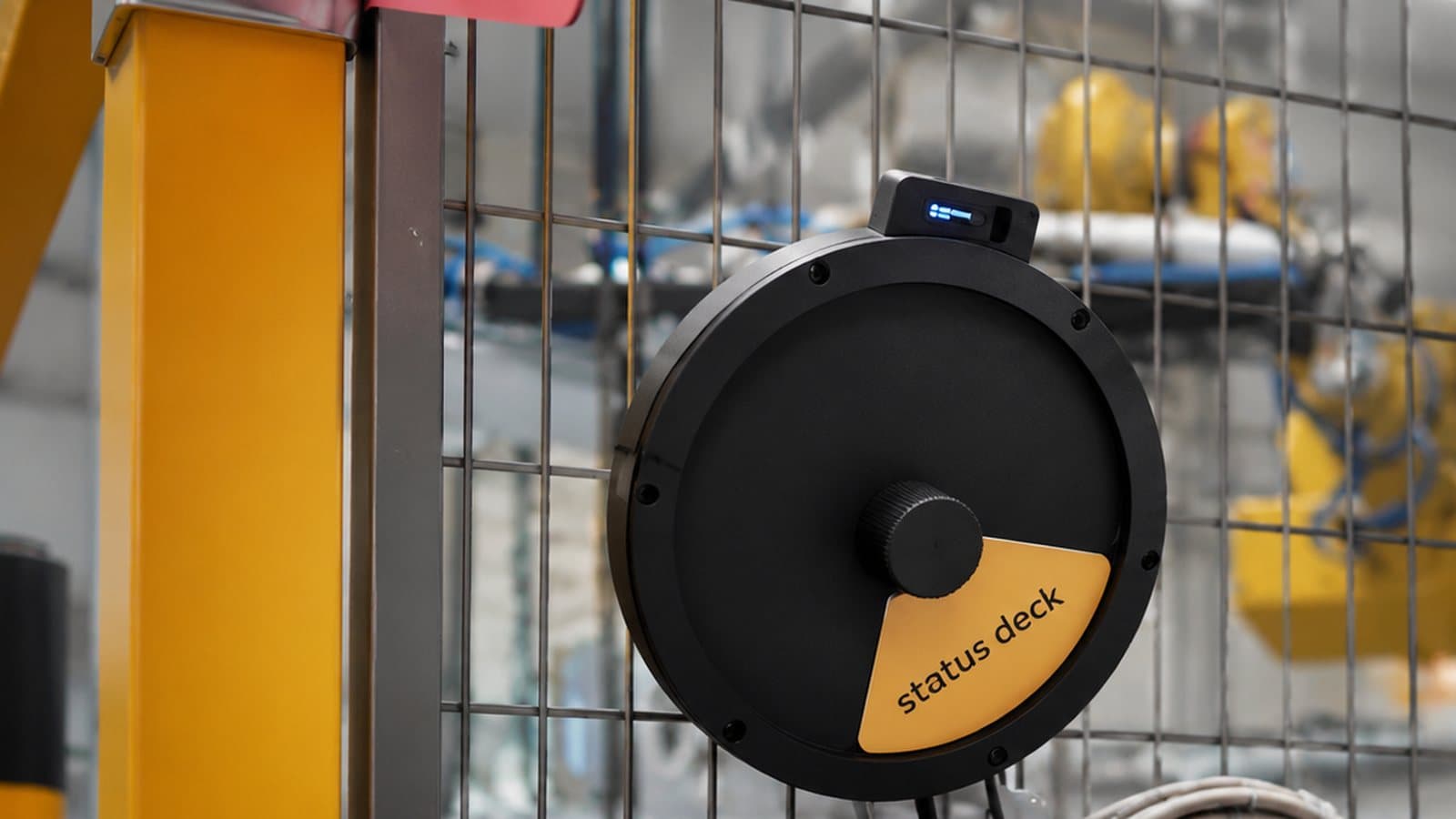
When you are ready to close the loop
Check these conditions on the line before you add response rules:
- Machine states are trusted by production and maintenance.
- "Unknown" is a small share of downtime, for example under 10%.
- Every alert has an owner and an acknowledgement time.
- A short daily review of the top losses already happens.
- Response time is measured, so you can see whether new rules help.
If alerts are still ignored, fix that first. Our article on why machine alerts fail on the shop floor covers the usual causes.
Turning signals into maintenance priorities without noise
The process industries already have a standard for alarms: ISA-18.2 treats alarm management as a lifecycle, from a written philosophy through rationalization to monitoring and audit. Machine alerts in discrete plants need the same discipline, so every alert should have a reason to exist, a priority and an expected action.
For maintenance, rank signals by four questions:
- Does it hit the bottleneck or a line with no buffer?
- Is it repeating on the same machine or component?
- Is it a safety or quality risk?
- What does a day of delay cost in lost output or follow-on damage?
Vorne separates breakdowns from minor stops, which typically last a minute or two and do not need maintenance personnel. Keep minor stops with the operator and count them. Send only the patterns that pass the questions above to maintenance planning. When a pattern needs parts or a shutdown window, it becomes a CMMS work order; the rules for that are in when to integrate IoT with MES, ERP and CMMS.
In DBR77, this ranking is done by DBR77 Vector. It turns incoming signals into "what to act on first" and runs inside the plant's IT/OT boundary, not in a public cloud, which matters for security reviews based on ISA/IEC 62443.
A response ladder: who acts on which signal
The ladder below gives every pattern one response level and one owner. The thresholds are illustrative; set your own with maintenance and planning.
| Signal pattern | Response level | Who acts |
|---|---|---|
| Single stop under 5 minutes, cleared at the machine | Quick fix, reason logged | Operator |
| Stop longer than 15 minutes or needs a technician | Maintenance task, escalation after 5 minutes without acknowledgement | Technician on shift |
| Same fault 3 or more times in a week | Planned work order, cause check | Maintenance planner |
| Bottleneck loss larger than the buffer before an order's due date | Plan change review | Production planner with shift leader |
| Same loss in the top three for two weeks, or a customer complaint | A3 or 8D | Line owner with a cross-functional team |
| Near-miss from a camera or sensor | Containment and HSE record | Shift leader and HSE |
Close the loop across the plant
DBR77 IRIS turns machine and camera events into tasks, work orders and plan reviews with an owner, and tracks each response until it is closed.
When real-time data should change the production plan
A planner who ignores the floor until tomorrow loses output, and so does one who replans every hour. Illustrative rules for a two-shift plant that avoid both:
- Freeze the current shift. The shift leader handles changes inside the running shift.
- Review at fixed points, for example at shift start and mid-shift.
- Replan only on a real trigger: a bottleneck outage longer than the buffer, a missing material that blocks an order, or a due date at risk.
- Change sequence before capacity. Swapping two orders is cheaper than adding a shift.
Before a larger change reaches the floor, test it. A digital twin of the line can run the new sequence with real cycle times and stop patterns, and show its effect on output and due dates before the planner decides.
When a signal should open an A3 or 8D
A loss that keeps coming back, however fast the response, needs structured problem solving. Set a threshold in advance, for example the same loss in the top three for two weeks, or a fault returning after two work orders.
Pick the method to fit the problem. The Lean Enterprise Institute describes the A3 report as one sheet holding the problem, analysis, countermeasures and action plan, which suits a line-level loss. ASQ describes 8D as suited to problems whose root cause is not obvious or that cross departments, such as customer complaints.
With IoT data, the problem statement in either method uses real minutes and counts, and after the countermeasure the same data shows whether the loss actually fell.
Keeping the loop closed
To check that the loop stays closed, review a small set of numbers every month:
- time to acknowledge and time to fix, by stop category;
- share of tasks closed with a confirmed cause;
- repeat rate of the top faults;
- plan changes per week and how many came from real triggers;
- open A3 and 8D cases and their age.
Remove rules that create noise and add rules where losses slip through. Our article on IoT as a repeatable operating system describes how this becomes the plant's routine, and DBR77 IRIS runs the loop across lines.
FAQ
How do we avoid alert fatigue when we add more rules?
Give every rule a reason, an owner and an expected action. Review the number of alerts per shift monthly. Rules that rarely lead to action should be removed or merged.
Should the planner see every machine alert?
No. Send planners only events that threaten the bottleneck, material flow or a due date. Everything else stays with the shift.
When is an A3 enough, and when do we need an 8D?
An A3 suits a loss on one line that a small team can solve. An 8D fits problems with an unclear root cause that cross departments, or that reached a customer.
Where does DBR77 Vector run?
Inside the plant's IT/OT boundary. That keeps machine data under your control and makes security reviews shorter.
What changes first when the loop is closed?
Usually response time, because owners and escalation work from day one. Repeat faults and plan stability improve over the following months.
Conclusion
If alerts on the line are still being ignored, start with why machine alerts fail on the shop floor before adding rules. Otherwise, take the response ladder table above, replace its illustrative thresholds with values agreed with maintenance and planning, and name one owner per row. From the first week, track time to acknowledge and time to fix by stop category, because response time is usually the first number to move.
See a closed loop on a live line
In a 30-minute online demo we show how a stop becomes a task, a work order or a plan review, and how each response is tracked.
Sources
- ANSI, ANSI/ISA 18.2: Alarm Systems in the Process Industries, 2016
- Vorne, The Six Big Losses
- ASQ, What is 8D? Eight Disciplines Problem Solving Process
- Lean Enterprise Institute, A3 Problem-Solving: A Resource Guide
- ISA, ISA/IEC 62443 series of standards
- DBR77 IIoT pilot data, corrugated-packaging line (client anonymous), 2026