Alarms that reach the right person
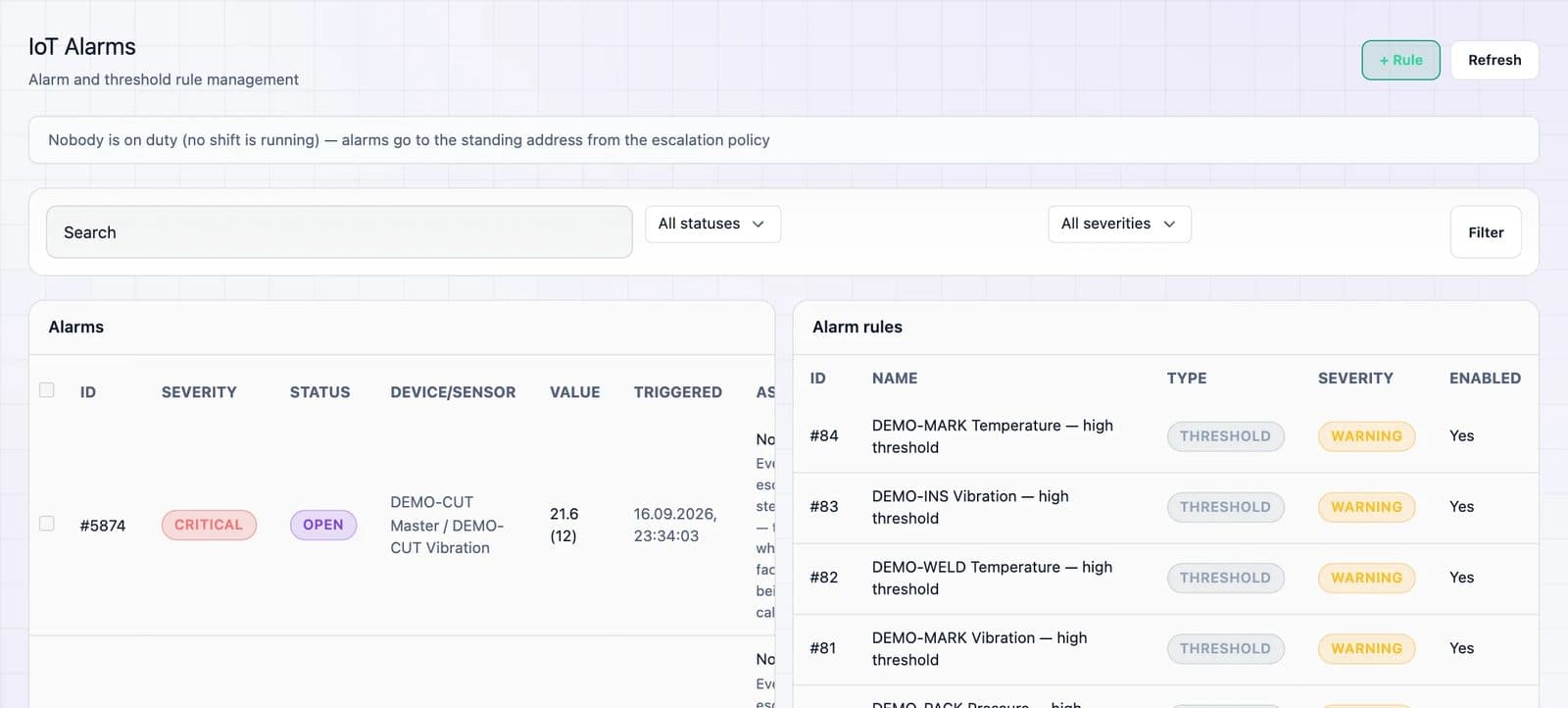
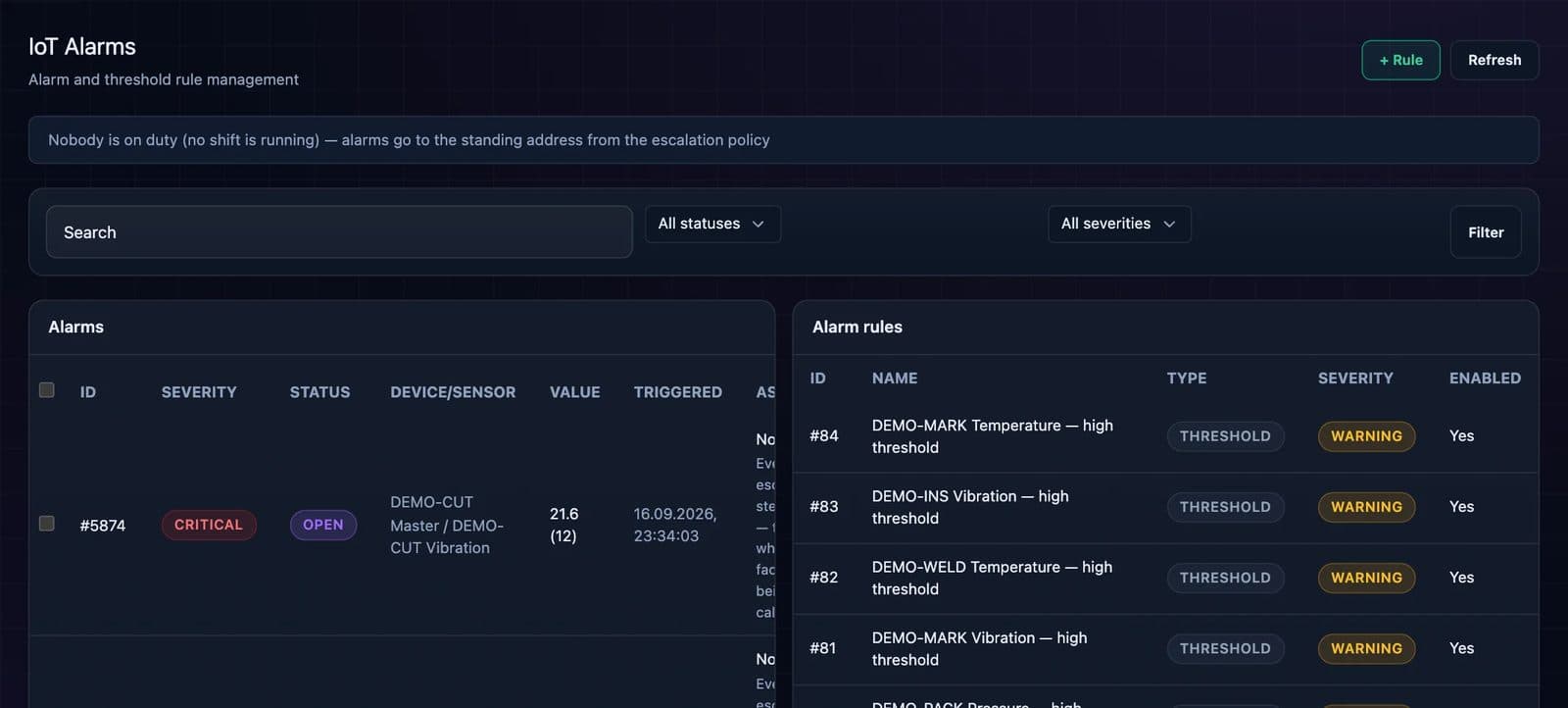
Rules watch the readings and raise an alarm when a value crosses a limit, drifts or behaves unusually. Escalation policies and on-call schedules decide who hears about it and when it goes up a level.
WHAT IT DOES
Rules, owners and escalation
Four kinds of rules
Threshold (a value above or below a limit), deviation (a percentage change against a baseline window), anomaly (an unusual value against a rolling window) and combined rules that join simple ones with and, or and not.
No alarm storms
After a rule fires, a cooldown blocks repeats, so one fault does not flood the phone.
Acknowledge, resolve, snooze
Every alarm has a status. People acknowledge it, resolve it or snooze it, and the list shows where each alarm stands.
Escalation and on-call
Escalation policies and on-call schedules decide who gets the alarm. When nobody is on shift, alarms go to the standing address from the policy.
Severity levels
Each rule has a severity, so a warning and a critical alarm do not look the same.
From alarm to work order
With IRIS CMMS, a high or critical alarm can open a maintenance work order. This path is switched on during the deployment.
HOW IT STARTS
Alarms people do not learn to ignore
- 01
Start with a few rules
Begin with the conditions that need someone to act now, and add rules once those work.
- 02
Name an owner
Each rule goes to a role with an escalation path, not to "maintenance" in general.
- 03
Watch the response time
How long it takes from alarm to action shows whether the rules work.
Alarms are not a safety system
Alarm rules work on sensor readings for production and maintenance. They do not replace machine safety functions.
Related parts of DBR77 IIoT
Test the rules on your data
See the alarms in the online demo, or set up the first rules on one line in a pilot.